- Details
-
By Johns Hopkins Medicine
Breast Cancer Cells 'Stick Together' to Spread Through The Body During Metastasis
Study reveals that E-cadherin, a molecule that allows cells to stick to each other, promotes metastasis in the most common type of breast cancer
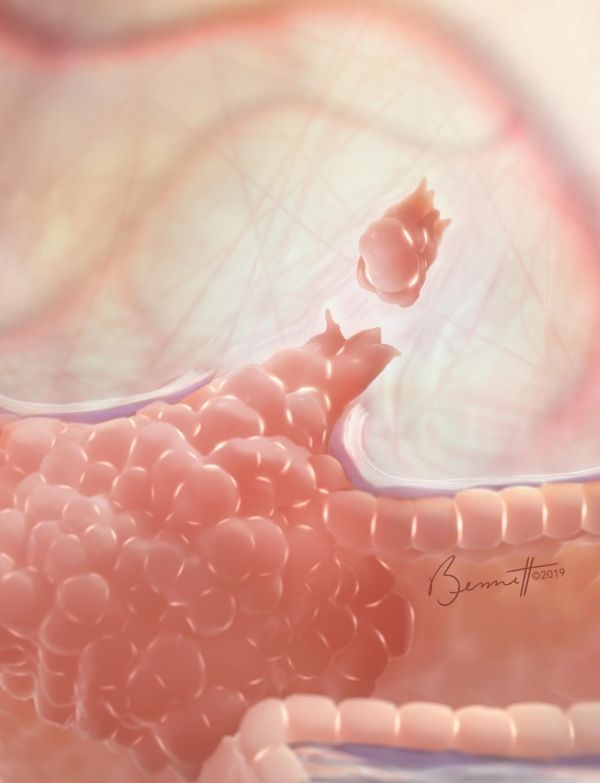
Researchers at the Johns Hopkins Kimmel Cancer Center discovered that a cell adhesion protein, E-cadherin, allows breast cancer cells to survive as they travel through the body and form new tumors, a process termed metastasis. Their conclusions, obtained through laboratory experiments and in mouse models, help explain how metastasis works in the most common form of breast cancer, invasive ductal carcinoma. E-cadherin appears to limit molecular stresses within the cancer cells and allow them to survive long enough to form new tumors. The finding, published online in the Sept. 4 issue of Nature, could lead to new ways to prevent breast cancers from recurring in patients.
“Previously, researchers thought that it was essential for cancer cells to lose E-cadherin in order to metastasize,” says study leader Andrew Ewald, Ph.D., professor of cell biology and co-director of the Cancer Invasion and Metastasis Program at Johns Hopkins Kimmel Cancer Center. “This was difficult to reconcile with the fact that breast tumors in patients typically continue to express E-cadherin. Our study was designed to test the role of this protein during metastasis.”
Read more at: Johns Hopkins Medicine
A cancer cell cluster escapes from a breast tumor. The E-cadherin mediated connections between the cells in the cluster (white bars) promote cancer cell survival during metastatic spread. (Photo credit: ©Brittany C. Bennett 2019)